
This isn’t a Pop Quiz. It’s a map built from 60,000 real human conversations.
The Qcards Emotional Profile is grounded in over a decade of scientific research, tens of thousands of hours of analysis, and a methodology borrowed from the most rigorous traditions of behavioural science.
Here’s exactly how it works and why it works.
Eight zones of light. Eight zones of shadow. One complete picture of you.
The Qcards map is organized into 16 zones — eight on the positive side, eight on the negative. Each zone is a constellation of closely related emotions, personality traits, values, and behaviours that share a common emotional energy.
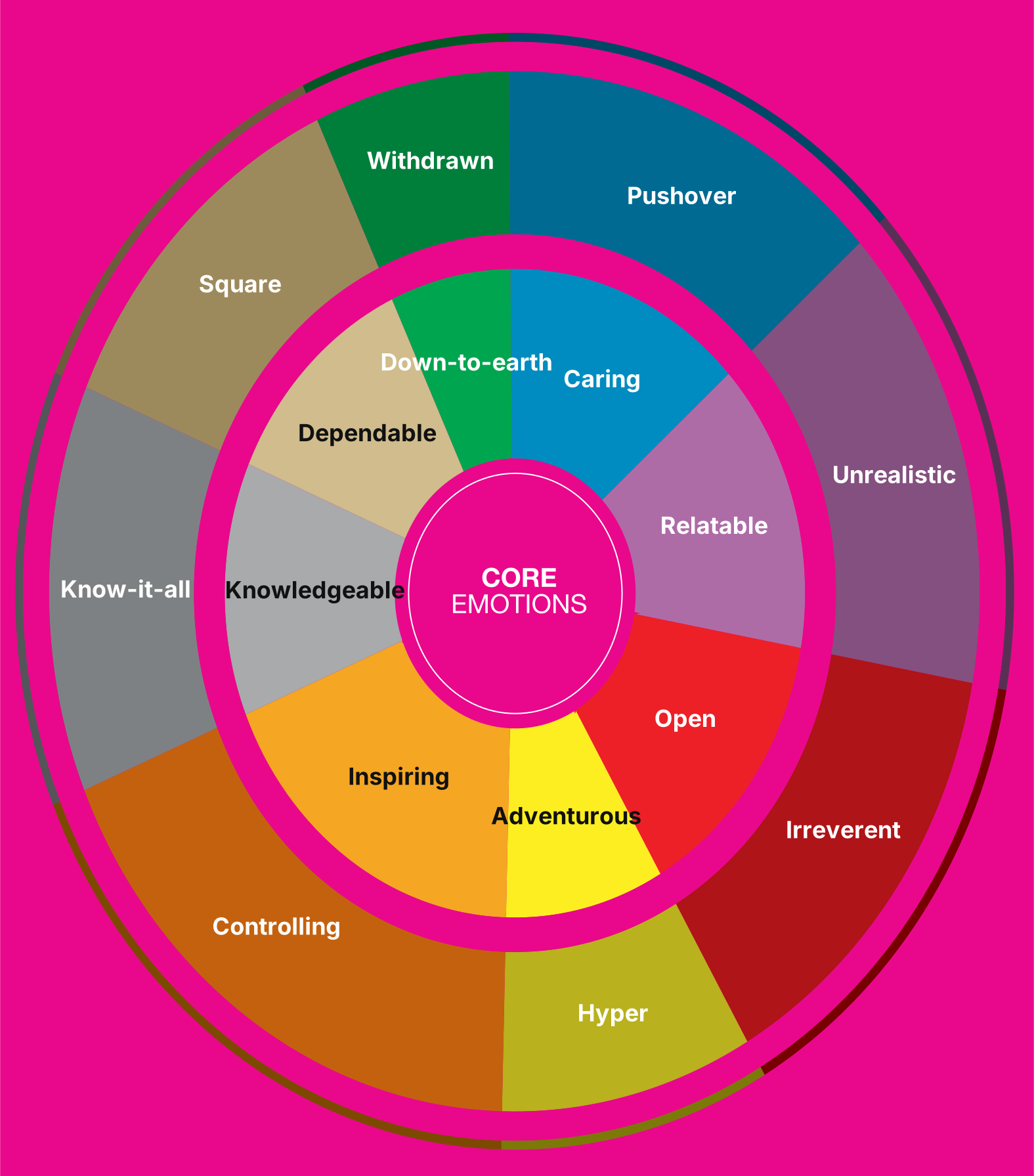

The 8 Positive Zones
Blue — Caring & Nurturing
The zone of love, compassion, empathy, loyalty, and gratitude. The emotional home of the nurturer, the caregiver, and the deeply connected.
Purple — Relationship & Connection
Where friendship, fellowship, belonging, and romantic feeling live. The zone of those who experience life most fully through their bonds with others.
Red — Joy & Openness
Home to happiness, pleasure, playfulness, and desire. The zone of those who are open to life, spontaneous, and emotionally expressive.
Yellow — Curiosity & Adventure
The zone of excitement, curiosity, enthusiasm, and wonder. Where explorers, creatives, and the endlessly curious find their emotional home.
Gold-Orange — Inspired & Influential
The zone of inspiration, self-confidence, ambition, and leadership. Where those who motivate, build, and drive change are most at home.
Silver — Knowledgeable & Analytical
Home to focus, reason, seriousness, and precision. The zone of the thinker, the scientist, the strategist.
Stone — Dependable & Grounded
Where calm, patience, safety, and reliability live. The zone of steady, trustworthy, quietly powerful people.
Green — Restorative & Down to Earth
Home to acceptance, comfort, faith, and trust. The deepest, most grounding zone — the emotional bedrock.
Core emotions
They are located at the centre of the positive map. They have the strongest connection to all positive states. Think of the Core as the ideal state of emotional being: the place every zone points toward.
Negative Zones
Each positive zone has a corresponding negative zone on the shadow side of the map — its opposite extreme. These negative zones represent what happens when positive energy becomes unbalanced, suppressed, or overwhelmed. They are not failures. They are signals, and the map shows you exactly how to navigate from them back toward the light.
A map of the human inner world. Literally.
A scientific map of language
A scientific map of language, built from how real people perceive and connect words. By revealing hidden patterns beneath language, it shows how meaning is organized in the mind—making it, quite literally, a map of the mind.
Spherical and three-dimensional
The map is built on a spherical, three-dimensional foundation, with positive words positioned on one side and negative words on the other — like daylight and darkness existing on opposite sides of the same world.
Two maps, one picture
For the Qcards Profile, the map is used in two forms: a Positive Focus Map, which illuminates the brighter side of your emotional world, and a Negative Focus Map, which reveals the shadow side — the areas where emotional pain, stress, and imbalance tend to live.
Zones, not categories
The zones shown on these maps are interpretive overlays that make visible what the data already reveals: certain emotions, personality traits, values, and behaviours naturally cluster together, forming distinct fields of human experience. We call these clusters zones, with eight zones on each side of the map.
The Research Behind the Emotional Map
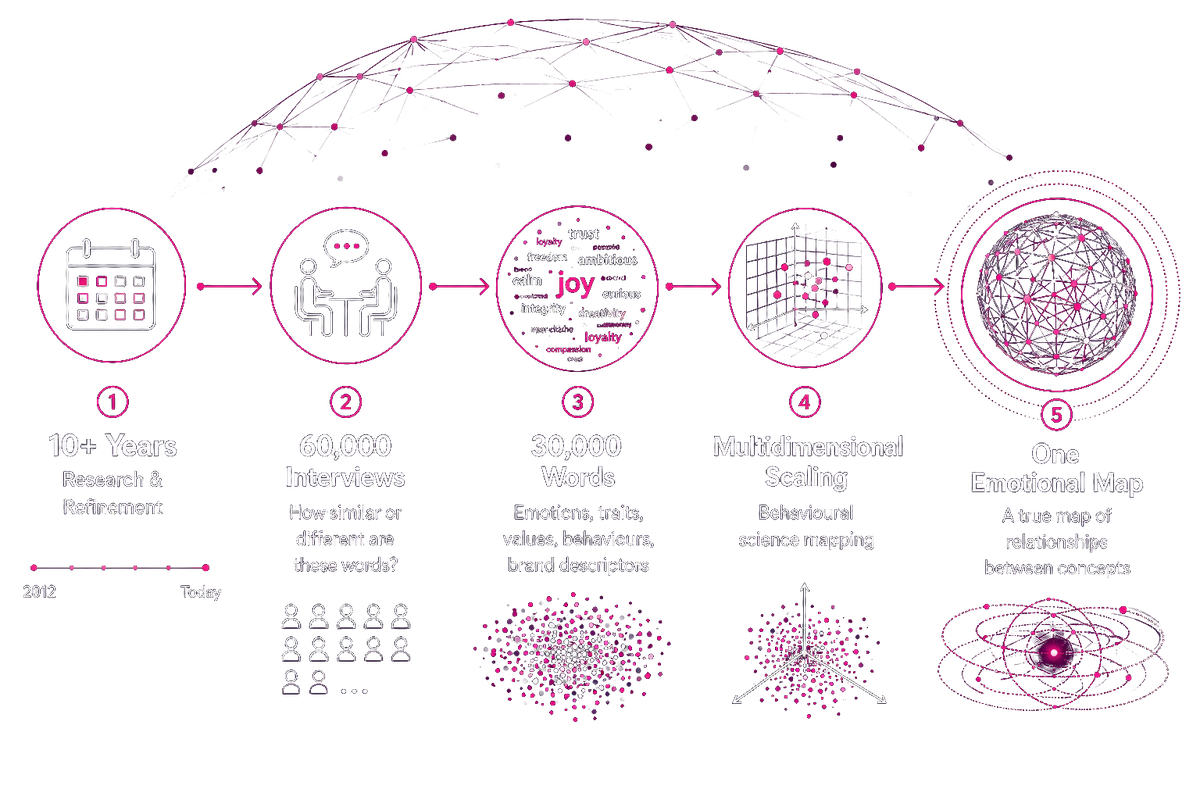
The Qcards Emotional Map was developed by Q.i. Value Systems Inc. through more than a decade of continuous research, testing, and refinement. The work began with thousands of hours of desk research, followed by structured interviews with 60,000 individuals.
During interviews, participants were shown hundreds of words, including emotions, personality traits, values, behaviours, and language used to describe brands, products, and experiences. They were asked one carefully designed question: how similar or different are these words from one another?
Participants also contributed synonyms in their own words, creating a vast vocabulary of lived emotional experience. From this process emerged a dataset of approximately 30,000 words, including 128 emotions, 250 personality traits, hundreds of values, hundreds of behaviours, and thousands of brand and product descriptors.
This dataset was then analyzed using multidimensional scaling, a statistical technique used in behavioural science to map the perceived distance between concepts. The result is not simply a diagram or a model. It is a true map, one in which the position of every word reflects its relationship to every other word, as perceived by 60,000 human minds.
In total, the Qcards Emotional Map represents more than $2 million CAD in investment and over ten years of dedicated research.
Most tools only look at one thing. Qcards maps four.
What makes the Qcards map genuinely different from every other emotional or personality instrument is this: it maps not just emotions, but the four dimensions of inner experience that shape who we are and how we live.
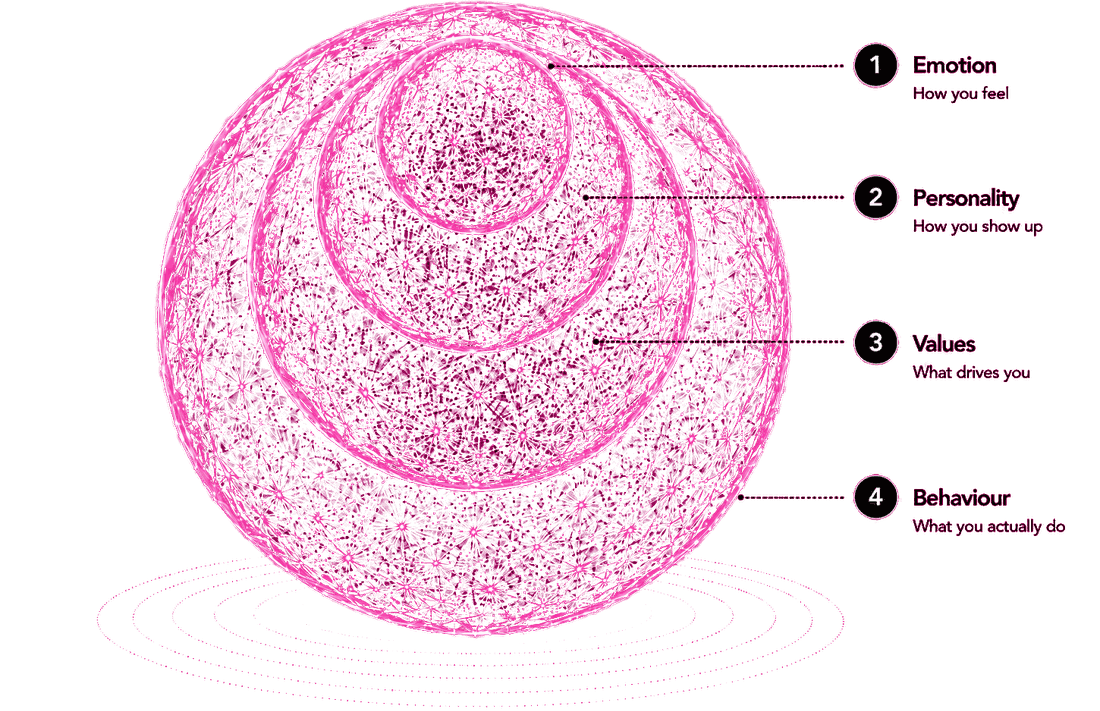
Emotions — How you feel.
The 128 cards at the heart of the Profile represent the most commonly recognized human emotions, positive and negative. They are the entry point — and the most direct window into your current inner state.
Personality traits — How you show up.
Personality is closely related to emotion — you could say that a personality trait is simply an emotion made habitual. As Dr. Tobias Schroeder summarizes it: personality is "the likelihood that someone will experience particular emotions." The map shows where your emotional world and your outward personality intersect.
Values — What drives you.
Values are not just beliefs. They are revealed in your goals, your loves, your aspirations, your behaviour, and even what you cannot stand. The Qcards map shows how your values are expressed — and where they may be in conflict.
Behaviour — What you actually do.
The outer layer of the map connects inner emotional states to outward actions and patterns. Understanding this connection is what makes Qcards actionable — not just insightful.
These four dimensions are not separate categories on the Qcards map. They are woven together — reflecting the reality that what we feel, who we are, what we value, and how we act are not separate systems. They are one integrated inner world.
Everyone knows what emotions feel like. Far fewer people understand what they actually are.
Most of us grow up learning to name our feelings — happy, sad, angry, afraid — and to recognize their effects in ourselves and others. But defining what an emotion actually is? That is much harder. Even scientists continue to debate it.
What researchers increasingly agree on is that emotions are much more than feelings.
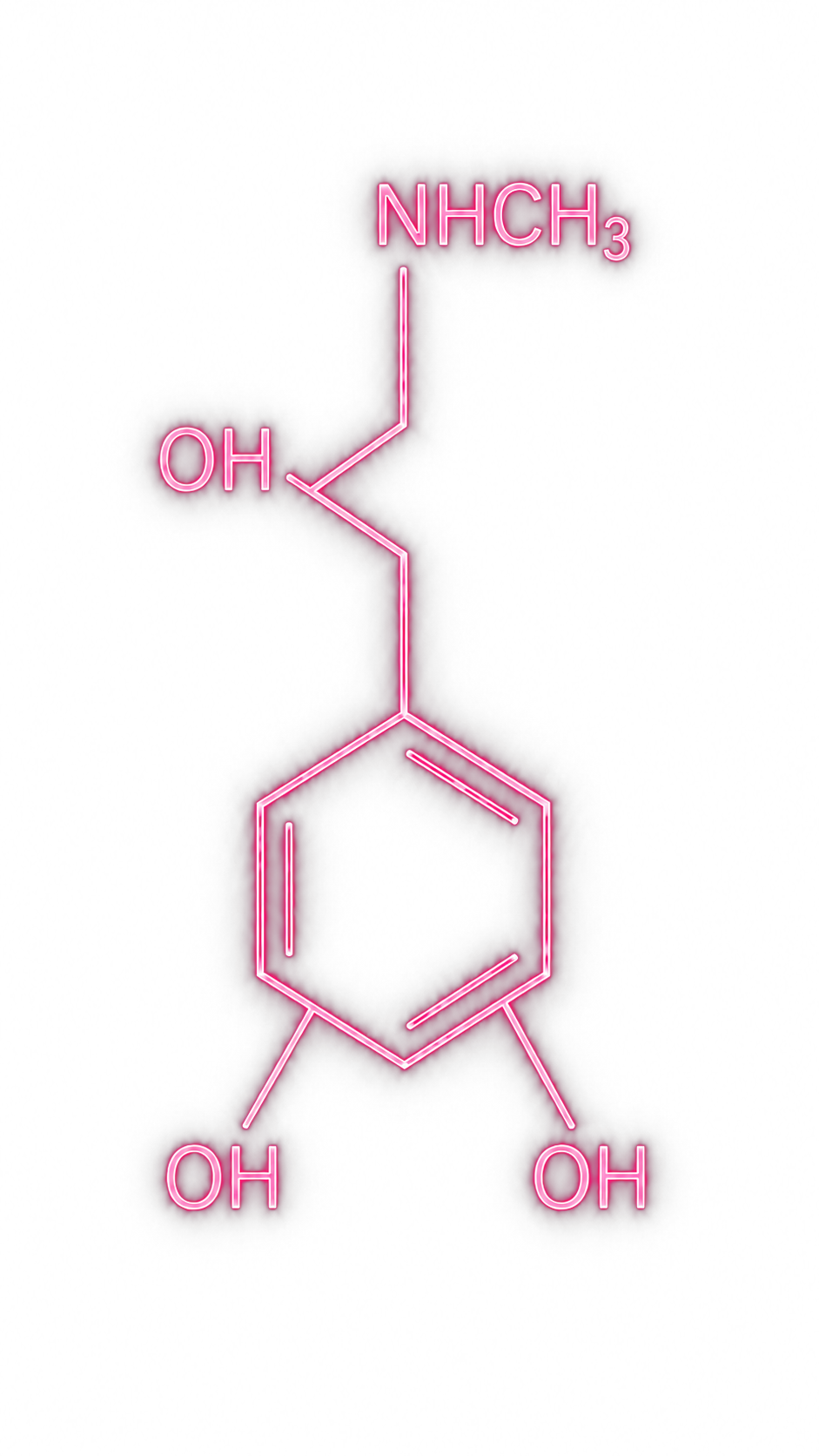
Adrenaline
Molecule
Neuroscientist Dr. Joseph LeDoux describes emotions as whole-body responses involving the brain, facial expressions, heart rate, hormones, and molecular changes throughout the body. When you sense a threat, fear is not just something happening in your mind. It is widened eyes, a faster heartbeat, adrenaline moving through your system, and your body preparing to respond — all at once.
Emotions are also more than reactions to what has already happened. They are anticipatory signals. Beneath conscious awareness, the brain is constantly processing enormous amounts of information and turning it into a fast, symbolic summary of what may matter next. We do not experience that summary as data or analysis. We experience it as a gut feeling. An emotion.
The Qcards Profile uses 128 widely recognized emotions to help you better understand your inner world — and see how your emotions may be shaping your behaviour, your relationships, and the direction of your life.
You’ve seen the science. Now experience it.
The Qcards Emotional Profile puts everything on this page into a single, guided experience — built around you, your emotions, and your place on the map.
Begin my free Profile